Using the words of St. Perpetua herself (which you can read here) I wrote this akathist to the Saint Perpetua and Her Companions over ten years ago. I was very impacted by St. Perpetua’s story. She is one of the earliest women writers whose work has been preserved throughout history. And so, I based the akathist on the events she herself relates. I received a blessing from Archbishop Irenee of Ottawa and all of Canada to distribute it.
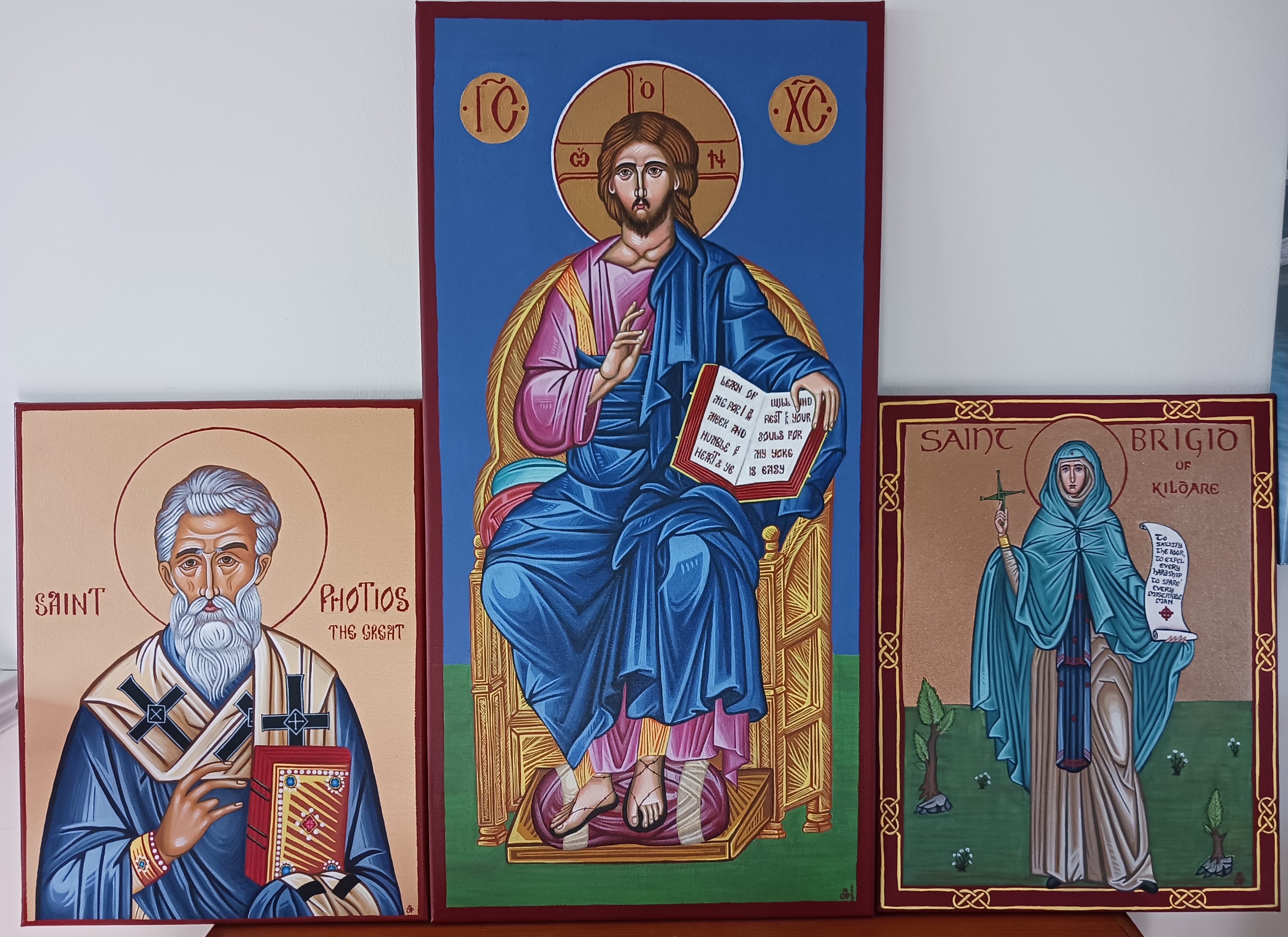
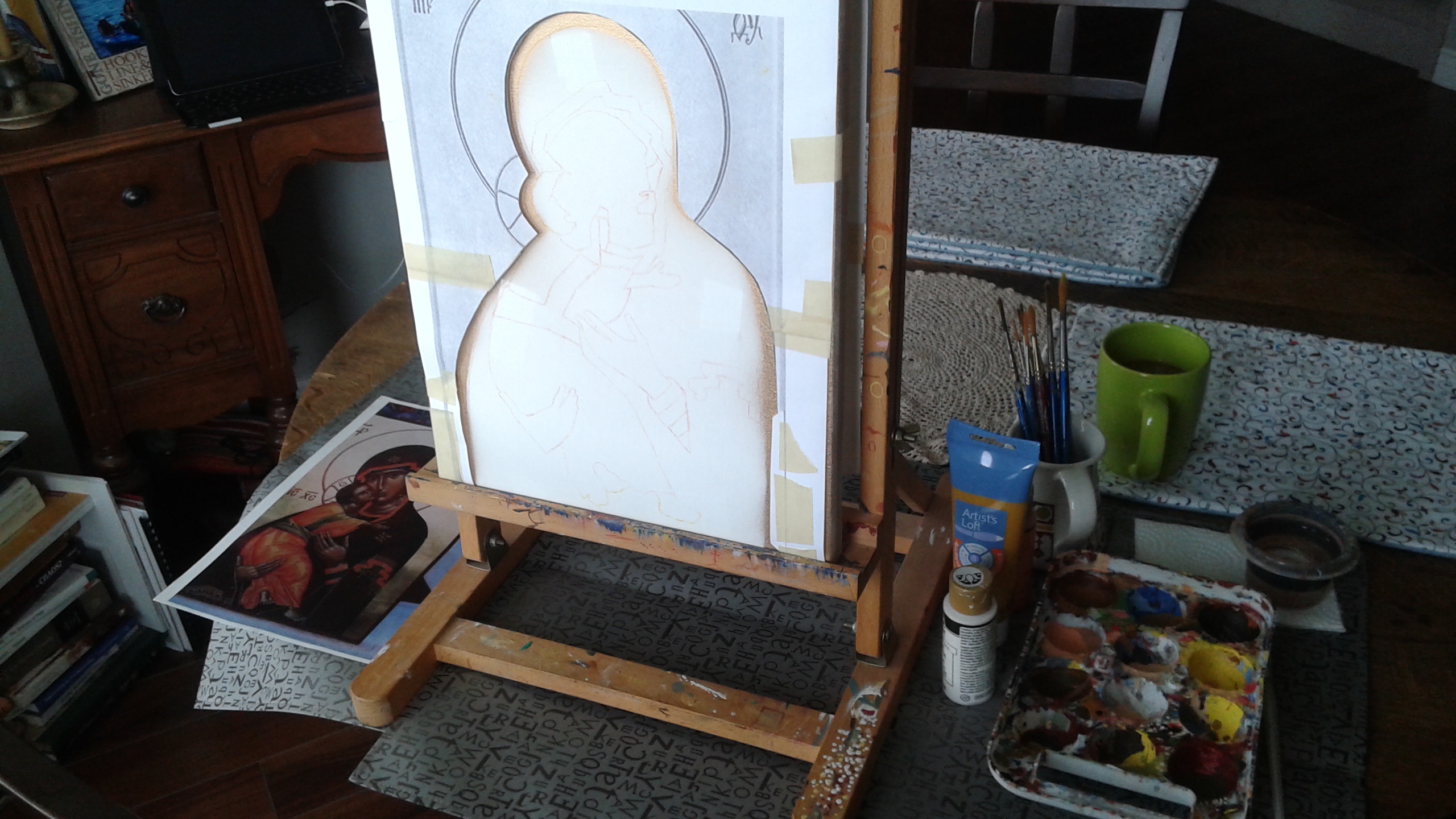
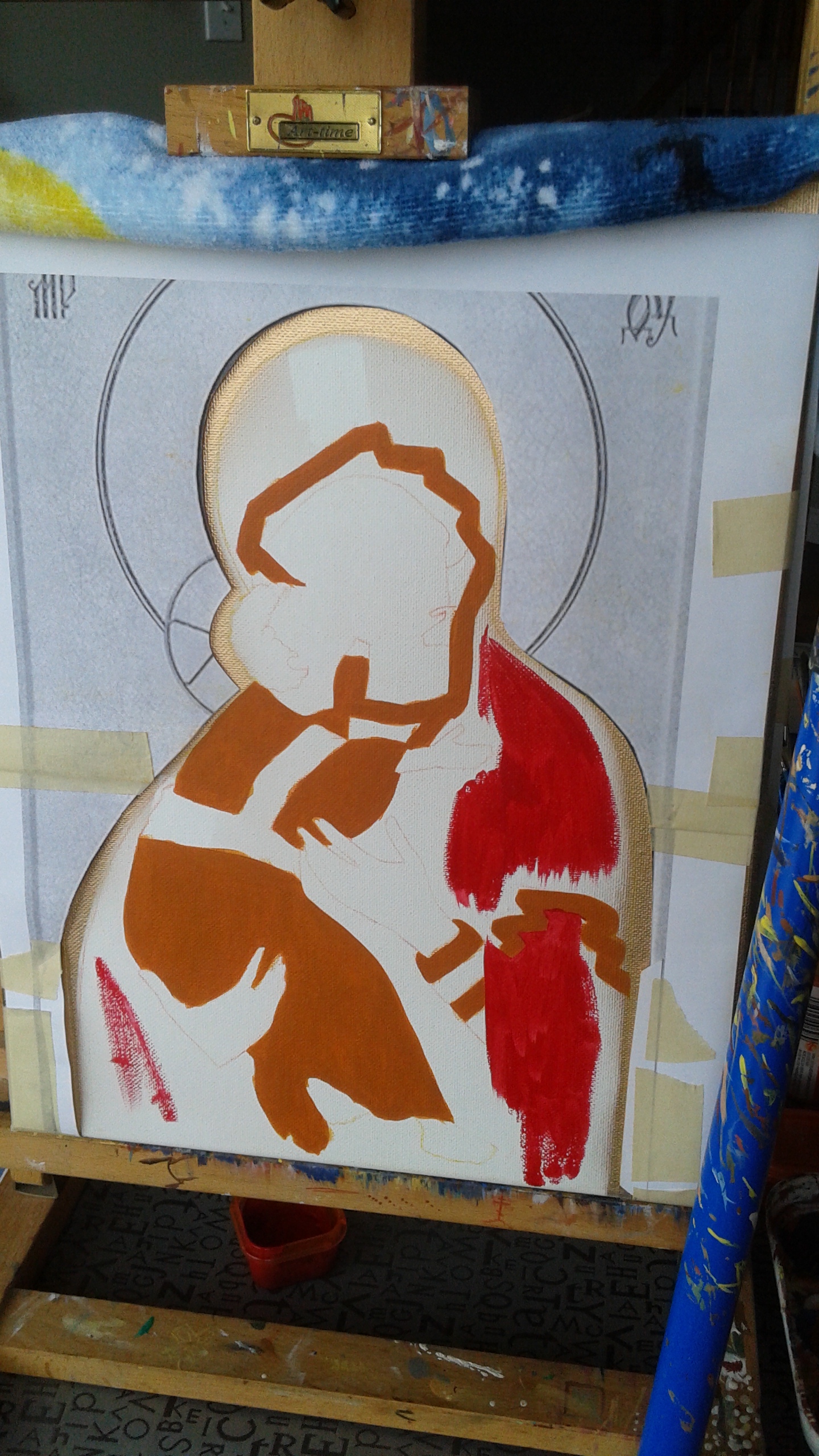
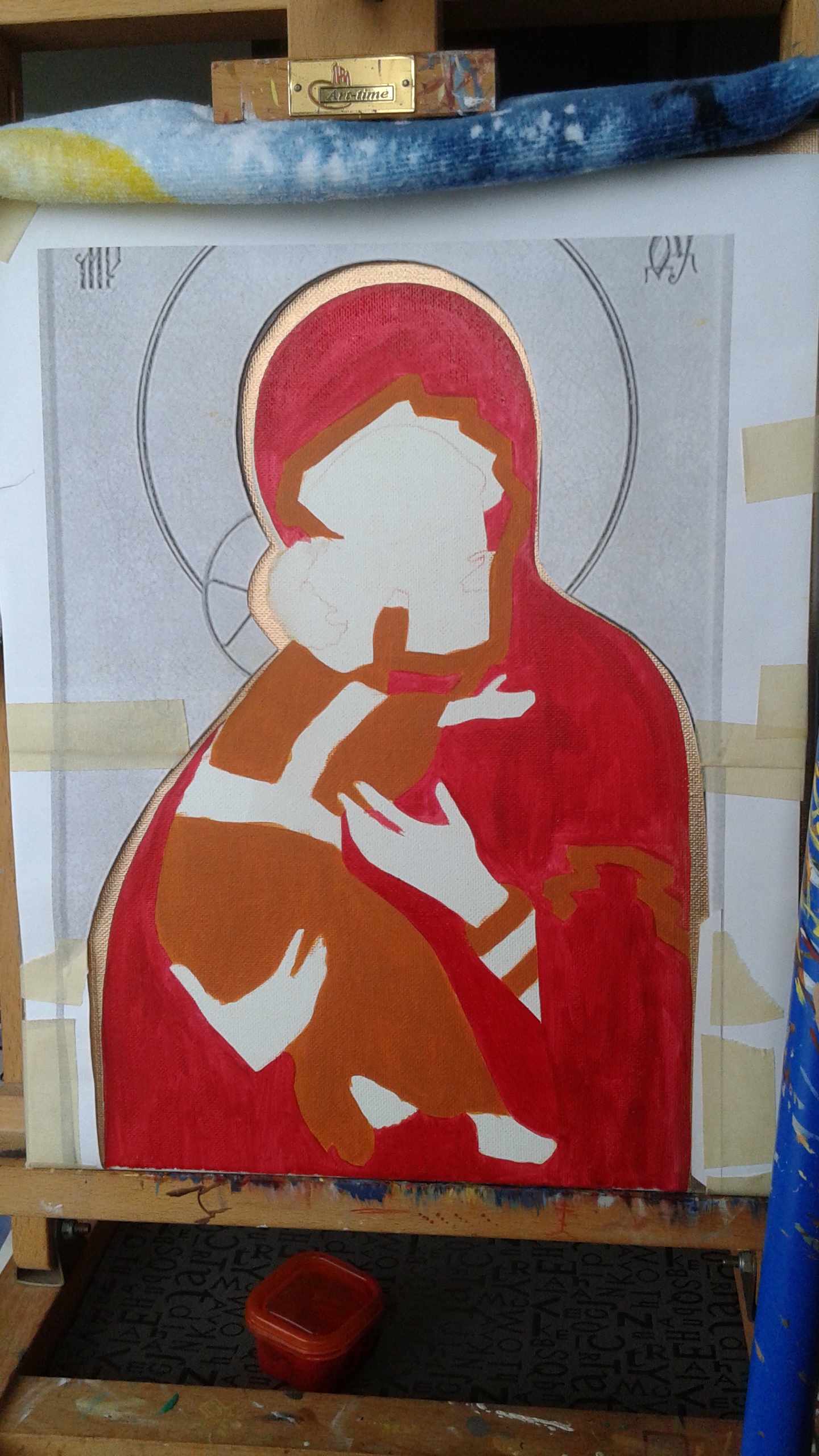
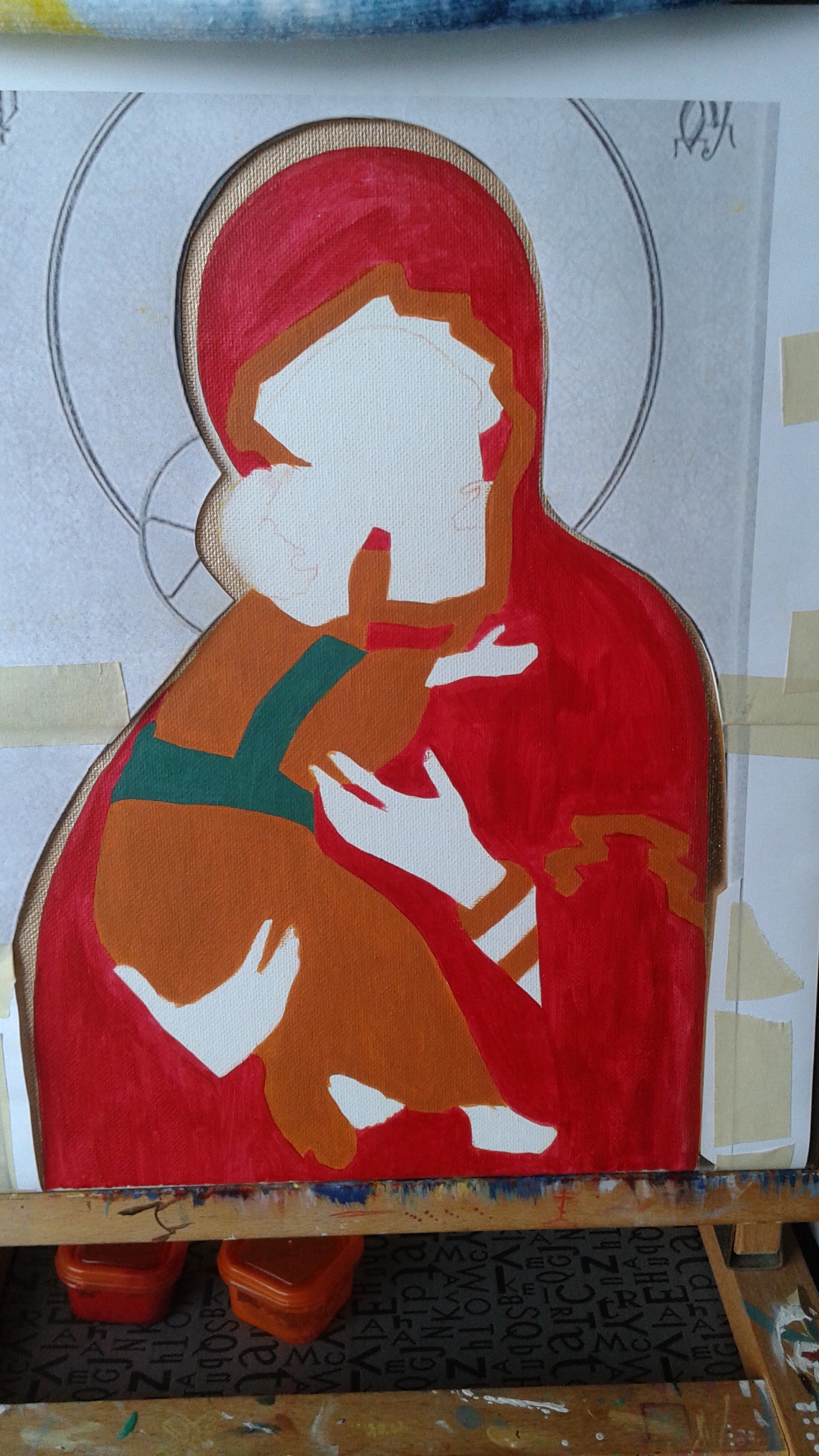
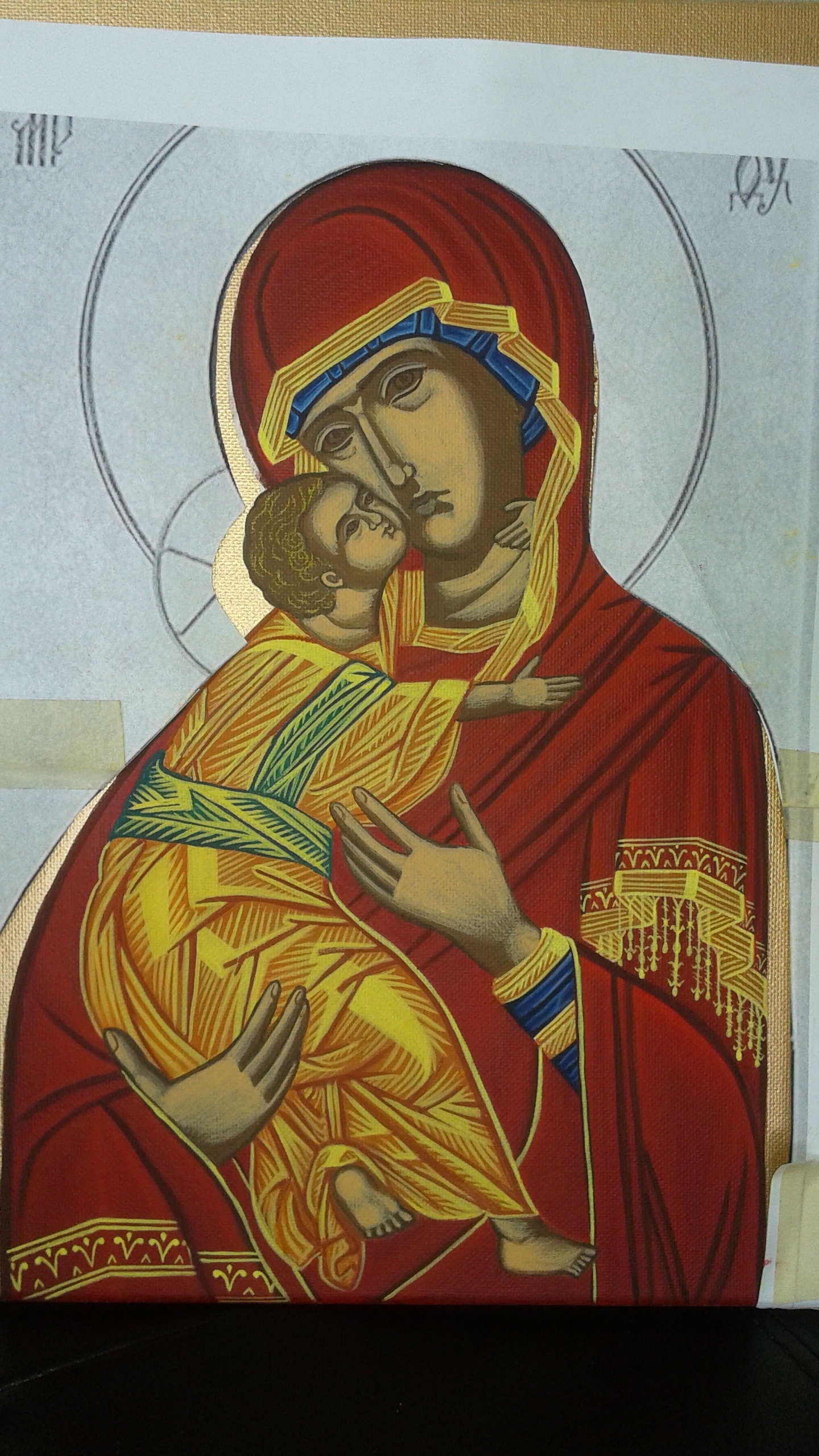
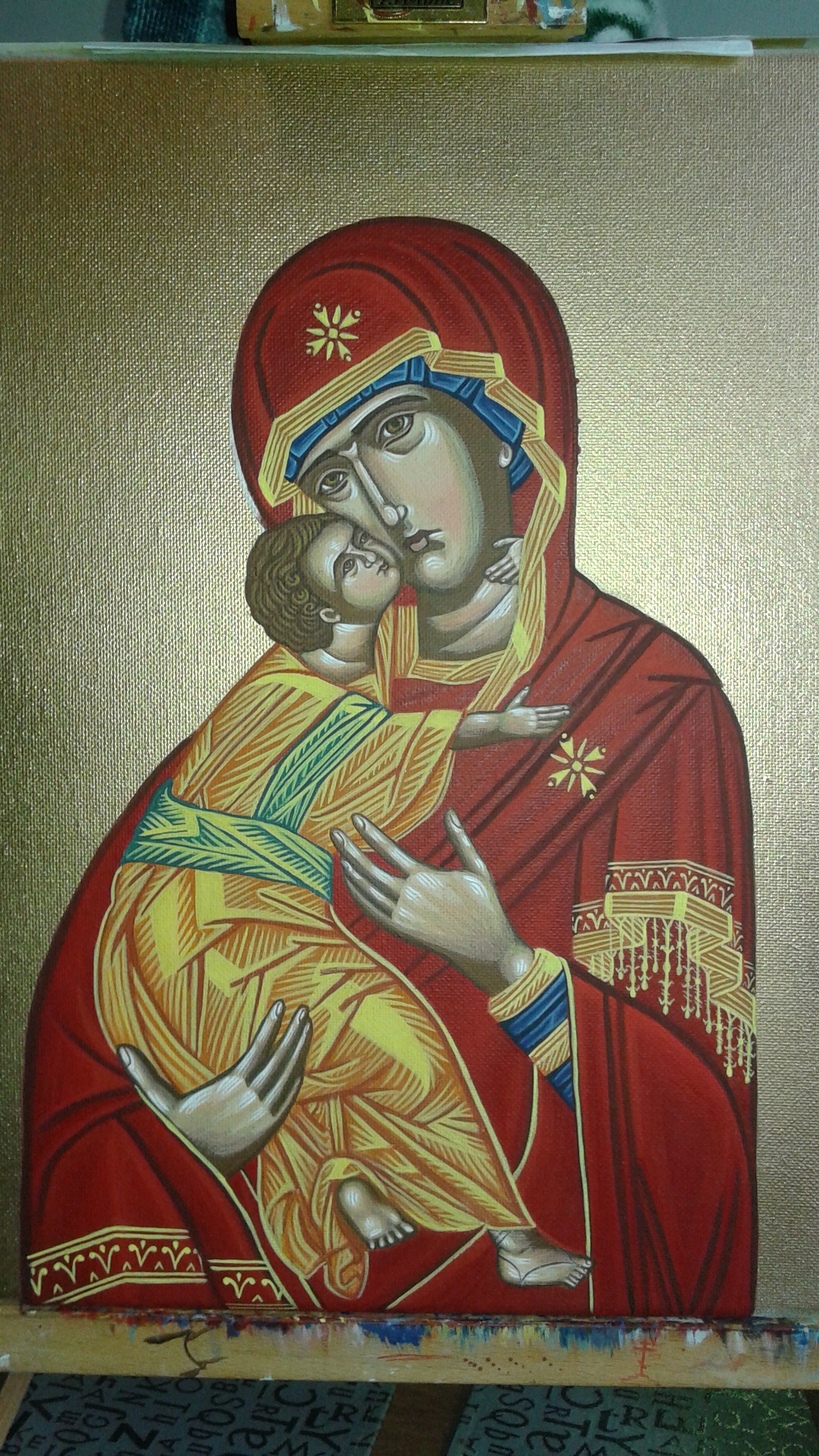
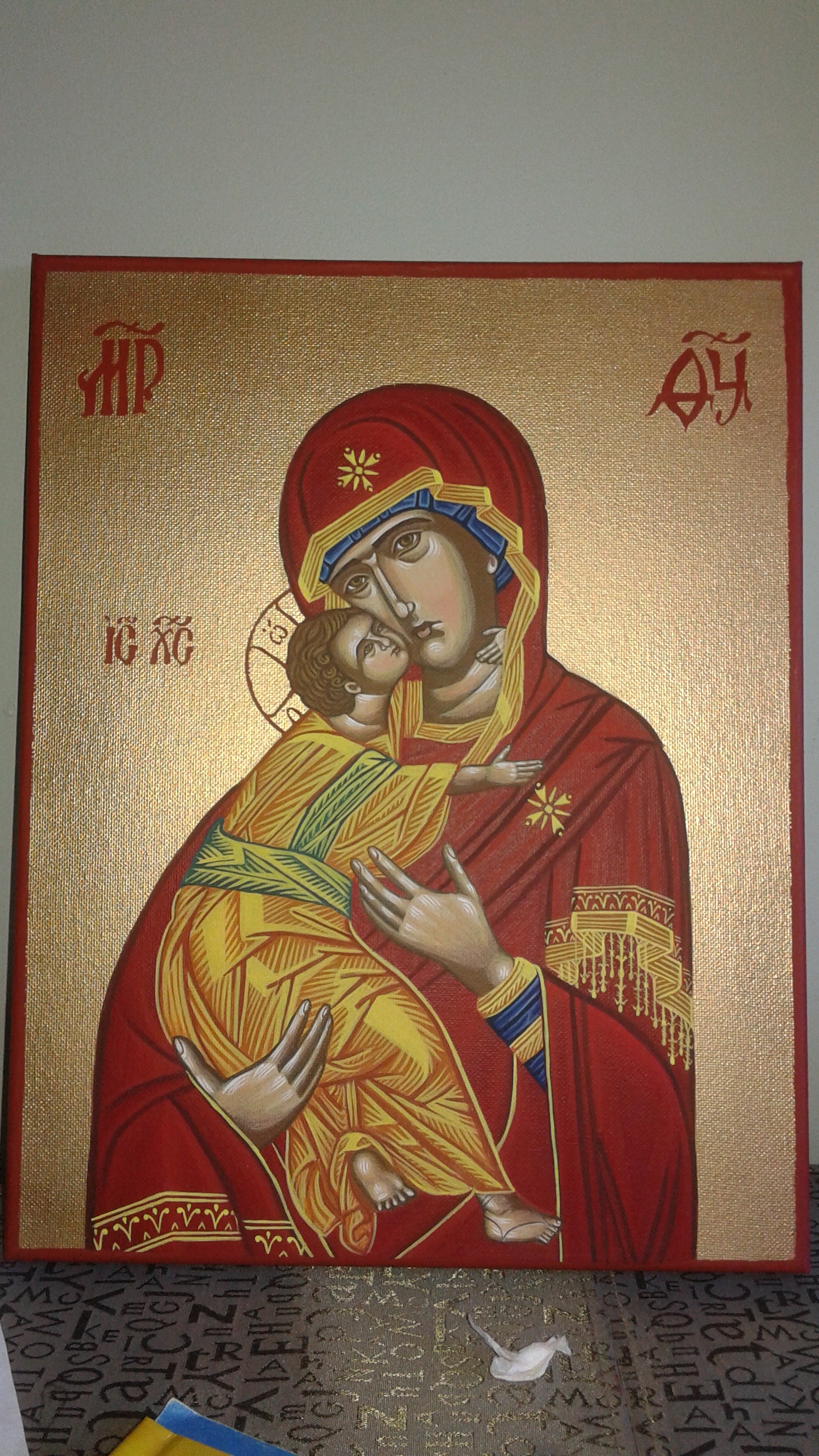
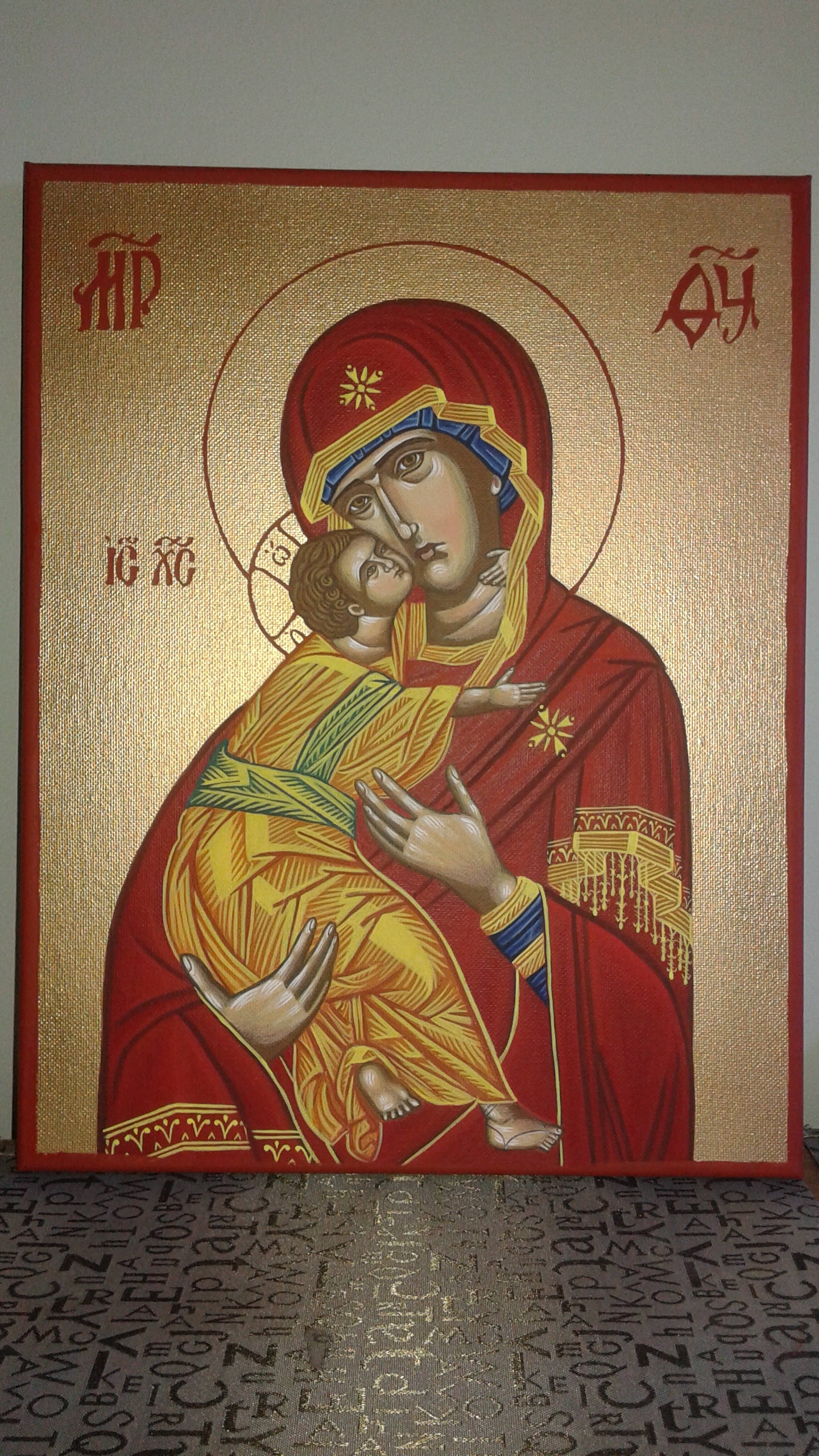
I also wrote a novella called Out of the African Lands: The Story of Saints Perpetua and her Companions (Lumination Press) and painted her icon (shown above). As you can tell, she means a great deal . I give glory to God that He is glorified in His saints and we benefit from their life and sacrifice.
May you have the prayers and blessings of Saints Perpetua, Felicity, Saturus, Saturnius, Secundulus and Revocatus!
When the Lord deemed it fitting He called His saints out of the African lands: holy Perpetua, Felicity, Saturus, Saturnius, Revocatus and Secundulus, to witness to their faith through suffering death. Thus, we have as an inheritance the flourishing tree of Orthodoxy, for they shed their blood, watering the seedling. Wherefore we cry aloud:
Rejoice, Holy Martyrs Perpetua, Felicity, and your companions
As a catechumen, O holy Perpetua, thou wast taken captive and while in prison thy father besought thee to denounce Christ. But boldly thou didst proclaim that thou couldst be called by no other name but Christian. Wherefore we marvel at thy conviction and cry out to thee thus:
Rejoice, thou who art a shining example for all catechumens
Rejoice, thou who chose the heavenly over thine earthly father
Rejoice, thou who refused to be called anything other than a Christian
Rejoice, being freed from the bondage of sin through baptism while yet in prison
Rejoice, for being informed by the Spirit thou prayed only for endurance of the flesh
Rejoice, Married Matron mother of a son
Rejoice, thou who wast tempted by womanly anxiety for thy suckling child
Rejoice, thou who wast ministered to by the holy deacons Tertius and Pomponius
Rejoice, thou who didst commend thy son to the care of thy mother
Rejoice, thou who didst comfort thy brother, a catechumen in the faith
Rejoice, thou who didst look upon the dungeon as a palace
Rejoice, Bold One asking the Lord whether thou wouldst die a martyr’s death
Rejoice, Holy Martyrs Perpetua, Felicity and your companions
Beholding a heavenly vision, holy Perpetua wast informed of her martyrdom. She was found worthy to see with spiritual eyes the contest of salvation. And looking upon the bronze ladder she didst see holy Saturus going up ahead of her, calling after her to follow. Wherefore we call to her:
Alleluia
Contemplating the narrow ladder holy Perpetua didst understand the struggle to enter Paradise, for as a vile serpent the devil lies waiting to strike. Yet encouraged by her teacher she didst trod on its head and ascended the ladder, her gaze fixed upward. Wherefore we cry to her:
Rejoice, thou who didst declare the serpent powerless in the name of the Lord
Rejoice, thou who didst proclaim the way to Life impossible for the negligent
Rejoice, thou who didst follow holy Saturus’ example in death as in life
Rejoice, thou who didst ascend and enter a vast garden
Rejoice, thou who didst stand in the company of many clothed in white
Rejoice, thou who wast greeted by the venerable Shepherd
Rejoice, thou who wast given to eat food sweeter than honey
Rejoice, thou who didst awake from thy vision at the word ‘amen’
Rejoice, Holy Saturus who wast found worthy to ascend the ladder first
Rejoice, O father who gave thyself up for the sake of the catechumens
Rejoice, Encourager of Perpetua to follow after thee in thine ascent
Rejoice, you who confidently forsook all hope in this world
Rejoice, Holy Martyrs Perpetua, Felicity and your companions
During their meal the martyrs were all called to the tribunal, and once there they all proclaimed themselves Christians. Refusing to offer sacrifice to the idols for the Emperor’s prosperity, they left the procurator Hilarian baffled, who knew not how to chant:
Alleluia
Ever faithful to the Lord the martyrs professed their faith before the procurator, and the crowd which had gathered. The sentence was read out against them, they were to be sent to the beasts. Cheerfully they returned to the dungeon, and thus we cry out:
Rejoice, Holy Contesters in the stadium of Carthage
Rejoice, Firm Pillars of the faith, convicted for the sake of Christ
Rejoice, Blessed Martyrs whose blood watered Orthodoxy
Rejoice, Holy Perpetua whose father once again tempted thee
Rejoice, thou who didst refuse to sacrifice even for the sake of thy child
Rejoice, thou who didst sorrow for thy father in his ignorance of the Faith
Rejoice, thou who didst proclaim nothing happens outside of God’s providence
Rejoice, thou who stood firm though confronted by the familial bonds of nature
Rejoice, thou who didst trust God would provide for thy son
Rejoice, thou whose child wast miraculously weaned though still a small infant
Rejoice, Band of Martyrs bound together by common love for Christ
Rejoice, you who were led to the dungeon as though to a bridal-chamber
Rejoice, Holy Martyrs Pertetua, Felicity and your companions
Fervently praying, Perpetua didst hear the name “Dinocrates”, who wast her departed brother in the flesh. As she didst behold in a dream, the little one was in a dark place and thirsty. But he was unable to drink of the fountain for the height was very great. Wherefore, she didst supplicate for him and we cry to her:
Alleluia
Great was her joy when Perpetua saw yet another vision wherein Dinocrates was healed of his infirmities. He drank his fill from the fountain – for he had been benefited by her ardent prayers, wherefore we praise her thus:
Rejoice, thou who didst help thy brother though a gulf was fixed between you
Rejoice, Deliverer from the suffering torments of Hades
Rejoice, thou who didst deem it laudable to pray with tears for thy brother
Rejoice, thou who didst spend thy days and nights supplicating God
Rejoice, Holy Martyr who supplicates for us on earth as thou didst for thy brother
Rejoice, little Dinocrates for thou wast delivered by thy sister’s prayers
Rejoice, thou whose face was healed once diseased by ulcers
Rejoice, thou who is now clothed in fine apparel
Rejoice, all ye in Hades, comforted by the prayers of the righteous
Rejoice, O fountain for thy ledge was lowered
Rejoice, O ever-flowing water who dost satisfy those who drink of thee
Rejoice, Golden Cup who dost provide nourishment for the thirsty
Rejoice, Holy Martyrs Perpetua, Felicity and your companions
Having seen the joy of her brother, Perpetua didst rejoice that he no longer was tormented – for where once was an ulcer there remained only a scar. And in drinking the water from the golden cup his thirst was quenched. Whenceforth, he ran off to play as children do, and we cry to her:
Alleluia
Influenced by the grace of the martyrs, Pudens, the prison-guard’s heart was softened and he began to magnify them. Thus being filled with mercy he permitted many to enter the dungeon so that all might be comforted. Wherefore they extolled the martyrs thusly:
Rejoice, Bold Intercessors before the throne of God
Rejoice, Bright Lamps burning in Northern Africa
Rejoice, for you patiently abided in dark dungeons
Rejoice, for you are now delivered into the light of Paradise
Rejoice, Perfect Examples of Christian friendship
Rejoice, Salt of the earth and light of the world
Rejoice, for you were condemned to death by the earthly Emperor
Rejoice, for you are now crowned with life by the Heavenly King
Rejoice, Contesters with unconquerable courage
Rejoice, Brave Warriors setting out to do battle for Christ
Rejoice, Peaceful souls eagerly awaiting His embrace
Rejoice, for from your bloodshed an abundance of life sprung forth
Rejoice, Holy Martyrs Perptua, Felicity and your companions
Just before the games, holy Perpetua beheld a vision of the upcoming day’s spiritual contest: hearing a loud knock she opened to the deacon Pomponios, clad all in white. He besought her to follow him and with much effort they arrived at the arena, wherefore we cry:
Alleluia
Knowing she was to contend with beasts, Perpetua marveled that none were sent out against her, but soon saw an Egyptian of ill-repute approach as her opponent. Thus she was striped and clothed with oil, while the Egyptian wallowed in dust. Wherefore encouraged by her vision we cry out:
Rejoice, thou who didst not shrink back in fear of the Egyptian
Rejoice, Brave Contender against the forces of evil
Rejoice, thou who wast found worthy to have angels as thine helpers
Rejoice, thou who wast offered a branch of golden fruit if victorious
Rejoice, Solider of Christ combating in the front lines
Rejoice, Fierce Fighter who didst smote thine enemy while trotting on air
Rejoice, Champion who didst dash thine enemy to the ground
Rejoice, thou who didst step on his head as though on a serpent
Rejoice, Victor over the enemy who hinders our ascent to heaven
Rejoice, thou who didst receive thy prize from the master of the gladiators
Rejoice, Conqueror of him who leads us to the gate of death
Rejoice, thou who didst understand that thine was the victory
Rejoice, Holy Martyrs Perpetua, Felicity and your companions
Lifted into the air by angels, O holy Saturus, in thy vision thou and holy Perpetua wert carried into the heavens. For contending well you were granted the promise the Lord had given you. Wherefore with the angels we cry out to you:
Alleluia
Marvelous trees with flowers of all kinds didst you pass by while being upborne by angels to venerate the Heavenly King. Trembling, they laid you down and you entered clothed in white raiment, and thus we cry out:
Rejoice, you who were carried by angels toward the East
Rejoice, you who didst pass over the Earth’s edge
Rejoice, Blessed Ones who didst overlook wondrous gardens
Rejoice, Marveled at by angels more glorious than the rest
Rejoice, Witnesses to the beauty of the heavenly kingdom
Rejoice, you who looked upon trees unknown to this earth
Rejoice, Spectators of leaves that sang without ceasing
Rejoice, you who met thy fellow-martyred companions
Rejoice, called upon by angels to go in and salute the Lord
Rejoice, Worthy Ones clothed in white raiment
Rejoice, Observers of a palace with walls made of light
Rejoice, Hearers of the thrice holy hymn chanted unto the Trinity
Rejoice, Holy Martyrs Perpetua, Felicity and your companions
Noticing in that place a man sitting, having hair like white as snow – yet youthful of countenance – you were borne up by angels to reverently kiss him. Whereupon he passed his hand over your faces and you offered the kiss of peace to the surrounding elders. And thus, together with them we cry to you:
Alleluia
Optatus the bishop, and Aspasius the priest and teacher stood on either side of the door from which you exited. Falling at your feet they supplicated the two of you to make peace between them. Wherefore you rose them up and embraced them with love. Marveling at your humility we cry to you:
Rejoice, Holy Ones worthy to see divine visions
Rejoice, Encounterers of spiritual parents in the heavenly garden
Rejoice, you who didst keep company in heaven with those on earth
Rejoice, you who didst receive humble bows done in your honour
Rejoice, you who didst humbly reciprocate the simple gesture
Rejoice, Peacemakers among thy fellow Christians
Rejoice, Poor in Spirit who didst win the kingdom of heaven
Rejoice, Mourners who art comforted eternally
Rejoice, Thirsters for Righteousness who have been satiated
Rejoice, Meek Ones who shall inherit the earth
Rejoice, Merciful Ones who have obtained much mercy
Rejoice, Pure of heart for you see God perpetually
Rejoice, Holy Martyrs Perpetua, Felicity and your companions
Putting aside the dissensions between them, Optatus and Aspasius followed the instructions of the angels and took heed of the advice given them. Thus did the angels warn Optatus to correct his people so that they might not continue in their crooked ways; wherefore we cry:
Alleluia
Quivering at the thought that thou might be prohibited to contend – for thou wast with child – O holy Felicity, thou and those with thee didst pour out your supplication to the Lord, that He might grant thee His favour. Immediately He didst hearken unto thy prayer and thou didst bring forth a daughter, wherefore we cry to thee:
Rejoice, thou who didst join in prayer with thy fellow martyrs
Rejoice, Slave in this life but servant of God eternally
Rejoice, Contester for the grace of martyrdom
Rejoice, Fervent Supplicator to God for His favour
Rejoice, Worthy One granted the grace of a safe and early labour
Rejoice, thou who wast not hindered by the ties of thine kindred
Rejoice, thou who didst entrust thy babe to a fellow Christian
Rejoice, thou who didst answer wisely in the face of insult
Rejoice, Wise Councilor proclaiming the strength of Christ in weakness
Rejoice, Sanctified One through the act of childbearing
Rejoice, Brave Martyr who dost remember those in want of children
Rejoice, thou who tasted of the felicity of dying for our Lord
Rejoice, Holy Martyrs Perpetua, Felicity and your companions
Readily prepared to die a martyr’s death, holy Secundulus wast called from this life while still in prison. For though his body knew not the sword his soul had suffered a martyrdom. Wherefore, in His ineffable mercy God preserved him from the beasts, and thus we cry to Him:
Alleluia
Spectators having gathered to gawk at the martyrs, the holy Saturus didst prophetically rebuke them: “Remember our faces for us you will see on the fearful Day of Judgement”. Wherefore, many departed astonished and of those that heard many were converted, and thus we proclaim:
Rejoice, Holy Martyrs whose martyrdom was recorded by the faithful
Rejoice, you who were treated harshly by the fearful tribune
Rejoice, Persecuted Ones out of fear of your escape
Rejoice, Bold Perpetua who didst scold the cruel adjutant
Rejoice, Faithful Ones who didst convert many while in prison
Rejoice, Workers of the vineyard who converted more by your common passion
Rejoice, Partakers of an Agape meal instead of common food
Rejoice, Communioners of the feast of the Body and Blood of our Lord
Rejoice, you who longed to be nourished by Christ instead of meat
Rejoice, you who forewarned the spectators of the coming Judgment
Rejoice, Brave Contesters prepared to fight on the birthday of Caesar
Rejoice, Saints of the Lord eagerly awaiting your death in His name
Rejoice, Holy Martyrs Perpetua, Felicity and your companions
The day of the games having dawned, the holy martyrs prepared for battle. Bravely entering the stadium, they were filled with joy as though in heaven. At the sight of Perpetua many cast down their eyes. Felicity came to her second baptism – from blood to blood, from midwife to gladiator. Wherefore we cry out:
Alleluia
Unable to convince the martyrs to put on the robes of idolaters, the tribune suffered that they should be brought forth as they were. Perpetua began to chant psalms, Revocatus, Saturninus, and Saturus mocked the senseless Hilarian, saying, “Thou judgest us and God thee,” and in this way displayed their bravery. Wherefore we cry to them:
Rejoice, Holy men refusing to wear the robe of the priests of Saturn
Rejoice, Holy women refusing to wear the dress of the priestesses of Ceres
Rejoice, you who refused to have anything to do with lifeless idols
Rejoice, for by your boldness injustice didst yield to justice
Rejoice, for you were scourged before the line of the gladiators
Rejoice, Rejoicers in your sufferings for the sake of Christ
Rejoice, Brave Soldiers fighting in the trenches of a spiritual battle
Rejoice, Holy Perpetua, singing as though trampling on the head of the Egyptian
Rejoice, Holy Felicity, rejoicing that thou wast not left behind in prison
Rejoice, Holy Revocatus, who didst boldly glare at the gawking crowd
Rejoice, Holy Saturninus, who didst taunt the darkened Hilarian
Rejoice, Holy Saturus, who didst yearn only for the heavenly kingdom
Rejoice, Holy martyrs Perpetua, Felicity and your companions
Virtue being her first concern the holy Perpetua bound up her disheveled hair, lest any should think she mourned her glory. Being brought out against the mad cow – placed there to mock their sex – the crowd shuddered at the sight of milk running from the breasts of holy Felicity. Wherefore, we cry to them:
Alleluia
Wishing to wear the more glorious crown, holy Saturninus asked to go against all the beasts, while Revocatus faced the leopard and the bear. In one bite by the leopard holy Saturus was bathed in much blood, wherefore the crowd mockingly called out, “saved and washed,” but we cry out thus:
Rejoice, Holy Revocatus who wast torn by a bear on a raised bridge
Rejoice, Holy Saturninus who wast granted thy desire to fight all beasts
Rejoice, Holy Saturus who would die first as thou didst prophesy
Rejoice, for the wild boar didst instead turn on its huntsman
Rejoice, for the bear knew better than to attack a martyr
Rejoice, Holy Martyrs for you were covered in the blood of a second baptism
Rejoice, Holy Perpetua, being caught up in theoria while in the arena
Rejoice, for thou wast more concerned for modesty than thy pain
Rejoice, Counselor of catechumens to keep the faith and love among them
Rejoice, Holy Felicity who wast smote for Christ’s sake by the fierce cow
Rejoice, for thy fellow martyr, Perpetua, didst raise thee up
Rejoice, Fair Maidens who didst forsake the beauty of your youth for eternal life
Rejoice, Holy Martyrs Perpetua, Felicity and your companions
Xenial friendship did the holy Saturus extend to Pudens when he did leave him a token of his love – a ring soaked in the blood of his wound. Joining the rest, assembled to be slain by the sword, each did die a martyr’s death. Perpetua directed the hand of the gladiator to her throat, by this showing that the evil spirits feared her most of all. Wherefore, moved by their sacrifice, we cry:
Alleluia
Through the prayers of our Holy Fathers, Lord Jesus Christ our God, have mercy on us and save us. Amen.











































 matushka constantina





 lessons from a monastery
You must be logged in to post a comment.